Notes from the house
What Is Oud? A Practical Guide to Oud in Perfume
Oud is the dark, resinous heartwood of the agarwood tree. Here is what it smells like, why it costs what it does, and how to start wearing it without being overwhelmed.
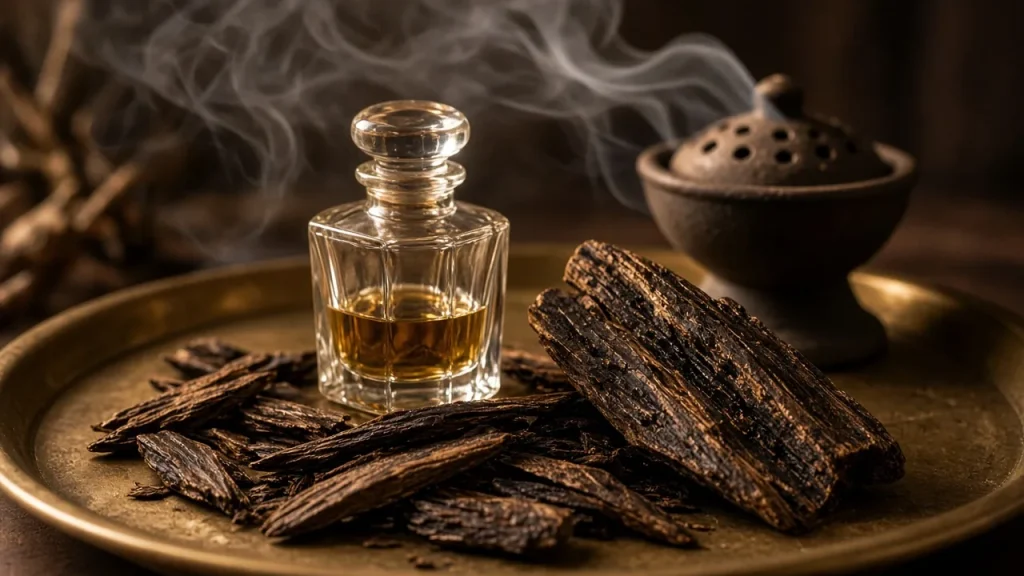
Few perfume words carry as much weight in the Gulf as oud. It shows up on bottles, in shop names, in wedding gifts and in the smoke that drifts out of majlis rooms. Yet many people buying their first “oud perfume” are not sure what the ingredient actually is, or why one oud fragrance smells soft and sweet while another smells like a smoky barn. This guide explains the material, how it is used, and how to pick an oud scent that suits you.
What oud actually is
Oud (also written oudh or aoud, and known in English as agarwood) is not a flower or a spice. It is a dark, resin-saturated heartwood that forms inside certain tropical trees, mainly species of Aquilaria and Gyrinops native to South and Southeast Asia.
A healthy agarwood tree is pale and almost scentless. When the tree is wounded and infected by mould, it defends itself by producing an aromatic resin. Over years, that resin darkens and saturates the wood. Only this infected, resinous wood is valuable. Wild trees with heavy natural resin are now rare, and agarwood species are listed under CITES Appendix II, which means international trade is regulated. Much of today’s supply comes from plantations where trees are deliberately inoculated to trigger resin production.
That resinous wood reaches you in three main forms:
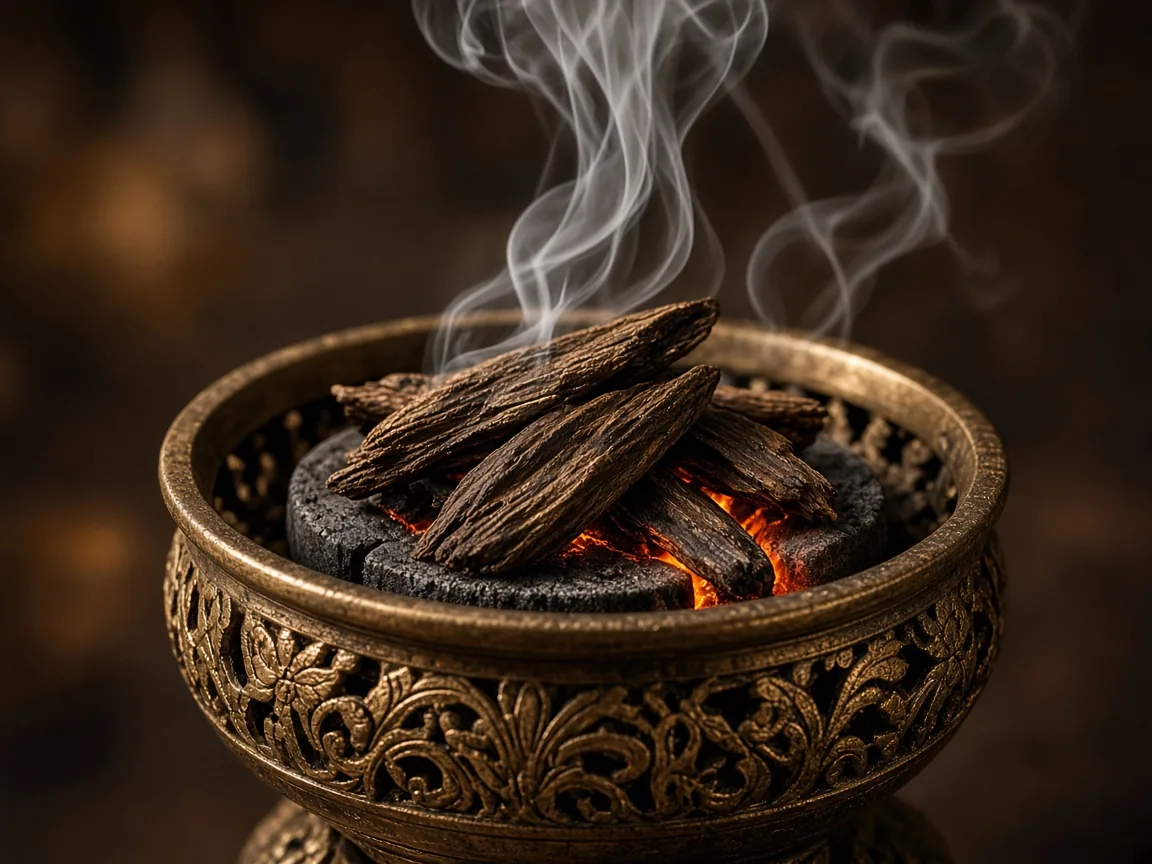
- Oud chips (bukhoor wood): small pieces of resinous wood heated on charcoal or an electric burner so the smoke scents clothes, hair and rooms.
- Oud oil (dehn al oud): the wood is soaked and distilled to produce a thick, dark oil. It is very concentrated and is usually worn neat, in tiny amounts.
- Oud in modern perfume: most sprays labelled “oud” use an oud accord built from synthetic and natural materials, sometimes with a small dose of real oud oil. This keeps cost and quality consistent and avoids heavy pressure on a protected resource.
What does oud smell like?
There is no single oud smell, which is why the word can be confusing. Depending on origin, age and distillation, real oud can show:
- Woody and resinous: the common thread, dry and deep like old polished wood.
- Leathery and smoky: a darker, tarry side.
- Animalic or “barnyard”: a funky, almost fermented edge, especially in some Indian oils.
- Sweet, fruity or honeyed: typical of many Cambodian and Thai oils.
- Medicinal or camphorous: a cool, slightly sharp facet that many first-timers notice.
Oud accords in sprays tend to smooth all of this into something cleaner: woody, a bit leathery, often softened by rose, amber or vanilla.
Regional styles you will see on labels
Traditional oil sellers often name oils by origin. These are broad tendencies, not rules:
- Cambodian (Cambodi): often sweeter, fruity and smooth.
- Indian (Hindi, Assam): often darker, more animalic and intense.
- Malaysian, Indonesian (Borneo) and Thai: range from fresh and green to sweet and resinous.
A single-origin oil such as Swiss Arabian Dehn El Oud Cambodi is a good way to smell oud in a purer form; the product page lists Cambodian oud as top, heart and base.
Why oud is paired with other notes
Because raw oud can be challenging, perfumers rarely let it stand alone. Looking at the published note lists for the oud scents in our own catalog, the same partners appear again and again: amber, patchouli, saffron, vanilla, musk and rose.
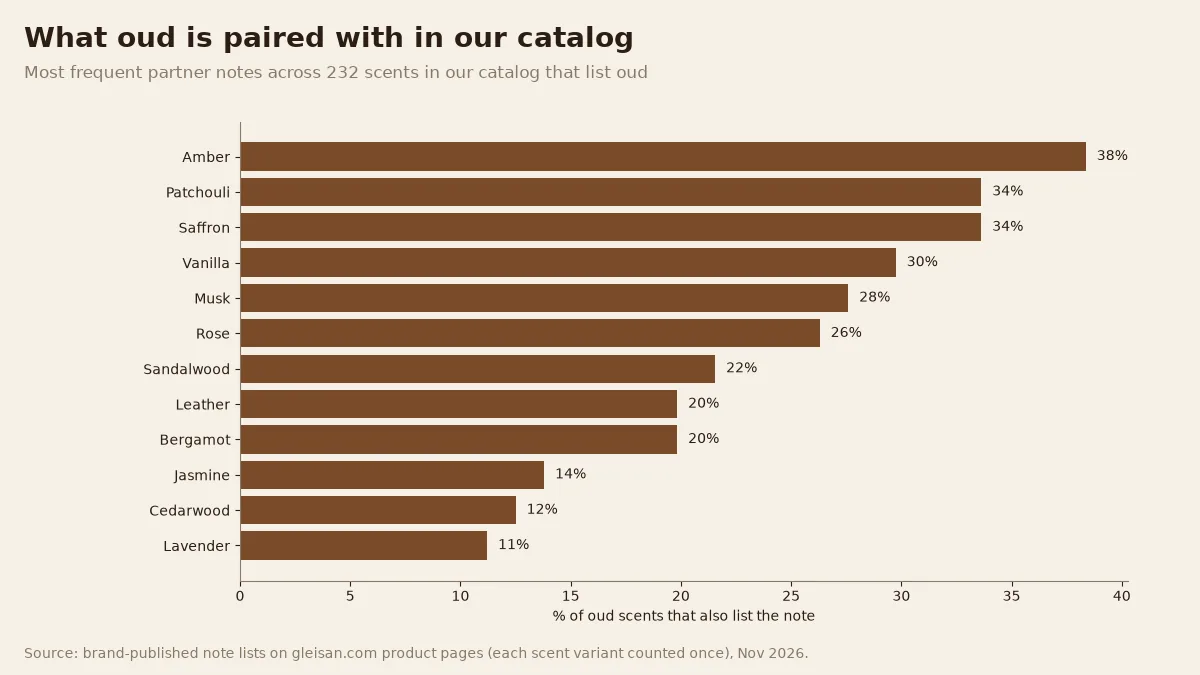
Each partner does a job:
- Saffron adds a leathery, slightly metallic spice that makes oud feel richer. See our guide to saffron in perfume.
- Rose softens oud’s edges; rose and oud is the most classic pairing in Arabian perfumery, covered in rose and oud: the classic pairing.
- Amber and vanilla add warmth and sweetness, making oud wearable for people who find it too dry. If you are unsure what “amber” means on a label, read amber vs ambergris.
- Musk gives a soft, skin-like trail and helps oud last.
How to start wearing oud
If you are new to oud, start where it is softened and build up:
- Start with a blended spray. Scents where oud sits beside sweeter notes are easiest. Swiss Arabian Shaghaf Oud lists saffron and oud at the top, rose and praline in the heart, and oud and vanilla in the base: a smooth, sweet introduction.
- Try a spicy, drier oud next. Lattafa Badee Al Oud in the Glory version lists saffron, nutmeg and lavender over oud, patchouli and musk. It is drier and more “oud-forward” than Shaghaf.
- Then smell an oil. Pure oils are where oud’s character really shows. Ajmal Dahn Al Oudh Al Muattaq is listed as oud from top to base. Use a dab, not a swipe.
- Finally, try smoke. Burning oud chips or bakhoor shows you yet another side of the material, and scents fabric gently.
Practical tips
- Less is more. Oud oils are potent. One small dab on the wrist or behind the ear can last most of the day.
- Give it time. Many oud scents open sharp or medicinal and settle after 15 to 30 minutes. Judge them on skin after the opening, not on the first sniff.
- Use heat wisely. In very hot weather, a small amount on clothing or hair can project better and stay smoother than heavy application on hot skin.
- Layer gently. Oud oil under a rose or musk spray is a traditional combination. Our guide on how to layer perfume oils explains the order.
Oud oil vs oud spray
The two are not substitutes for each other; they behave differently.
| Oud oil (dehn al oud) | Oud spray (EDP or extrait) | |
|---|---|---|
| Form | Concentrated oil, usually no alcohol | Alcohol-based, sprayed |
| How much | A dab | 2 to 5 sprays |
| Projection | Stays closer to the skin | Projects more in the first hours |
| Character | Shows the raw wood more clearly | Usually blended and smoother |
| Best for | Close wear, layering base | Everyday wear, a clear scent trail |
If you want a deeper comparison of formats, read perfume oil vs eau de parfum.
Is oud for men or women?
In the Gulf, oud has always been worn by everyone. Western marketing tends to frame it as masculine, but the material itself has no gender. Rose-oud blends are traditionally worn by women and men alike. If you are buying oud for someone else, it is safer to choose a blended oud with rose, amber or vanilla than a raw oil. Our Arabian perfume gift guide and the Gift Finder can help you narrow it down.
How to tell if an oud scent is right for you
Because oud varies so much, test it the right way:
- Spray on skin, not paper. Oud’s resin and animalic facets interact with skin.
- Wait for the heart. The top notes can be loud; the heart and base are what you live with.
- Smell it in the setting you will wear it. A dense oud that feels perfect on a cool evening can feel heavy in midday heat.
- Compare two styles side by side, for example a sweet blended oud on one wrist and a dry spicy oud on the other.
If you want to understand how top, heart and base notes work in general, start with fragrance notes explained.
Frequently asked questions
Is oud natural? Real oud is a natural resinous wood. Most modern sprays use an oud accord that combines synthetic materials with small amounts of natural oud or none at all. Pure oud oils are the most direct way to smell the natural material.
Why is real oud expensive? Resin forms slowly, only in infected trees, and wild agarwood is scarce and trade-regulated. High-grade, aged oils can take years to produce.
How long does oud last? Oud-based scents are usually among the longest-lasting materials in perfumery, especially in oil form. Exact longevity depends on the formula, your skin and the climate.
Can I wear oud in summer? Yes. Choose a lighter, blended oud, apply less, and favour clothing or hair over hot skin. Our best oud perfumes for men guide notes which styles feel lighter.
Oud rewards a little curiosity. Start with a smooth blend, learn its partners, and you will soon recognise the wood behind dozens of different fragrances. When you are ready to explore, browse every scent tagged with oud or try the Scent Finder.
Keep reading
- Saffron in Perfume: What It Smells Like and How to Wear It
- Rose and Oud: Understanding the Classic Arabian Pairing
- Amber vs Ambergris in Perfume: Not the Same Thing
- What Is Bakhoor? How to Burn It and Scent Your Home
- Best Oud Perfumes for Men: From Easy Starters to Deep Woods
- Best Attar and Perfume Oils to Try: A Buyer’s Shortlist
- Perfume Oil vs Eau de Parfum: Which Should You Wear?
Shop the story
Keep reading
17 Nov, 2026 · 6 min read
Christmas Perfume Gifts 2026: Ideas for Him, for Her and Last-Minute Shoppers
Warm, festive Arabian perfumes for him and for her, plus foolproof picks for last-minute shoppers who don't know the recipient's taste.
Read the story →
17 Nov, 2026 · 7 min read
Arabian Perfume Gift Guide: How to Pick a Scent for Someone Else
Buying perfume for someone else is easier than it looks. A practical guide to safe scent profiles, sets, oils and bakhoor, with picks for every kind of recipient.
Read the story →
17 Nov, 2026 · 7 min read
Perfume Gift Sets for Men: Sets Worth Giving
Which perfume gift set suits him? Travel sets, discovery kits and oud sets compared, with what's inside each and tips for choosing.
Read the story →