Notes from the house
Amber vs Ambergris in Perfume: Not the Same Thing
Amber is a warm resin accord; ambergris is a salty, musky marine note. How to tell them apart, plus ambroxan, ambrette and other confusing names.
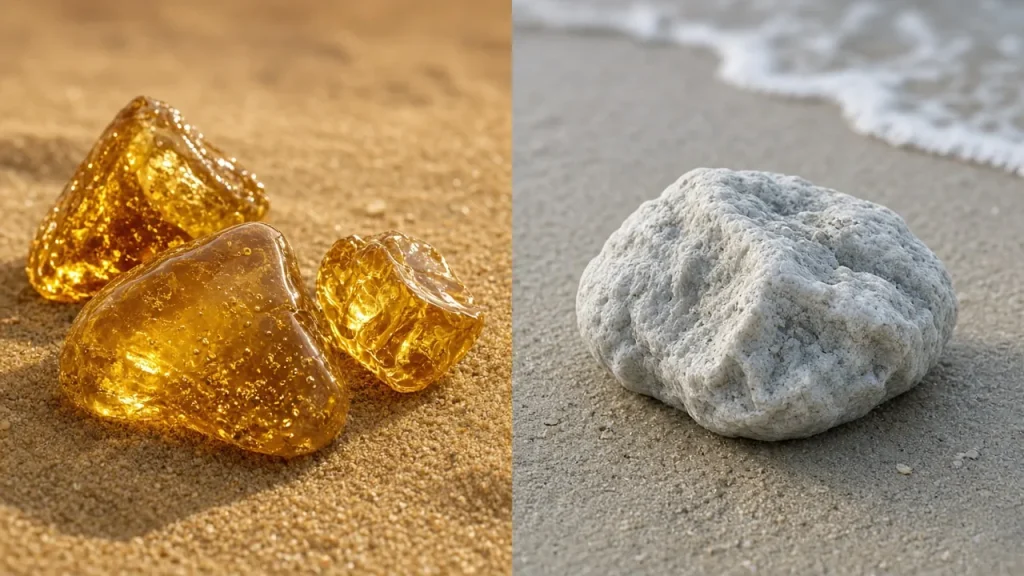
Few perfume notes cause as much confusion as amber and ambergris. The words look alike, and both are linked with luxury, but they describe completely different smells from completely different sources. Mixing them up is one of the most common reasons people buy a perfume that surprises them. Here is how to tell them apart.
The short answer
- Amber in perfume is a warm, sweet, resinous accord, usually built from labdanum, benzoin and vanilla. Think golden, cosy and slightly powdery.
- Ambergris is a rare material formed in sperm whales. Its scent is marine, salty, musky and subtly sweet. Today it is almost always replaced by synthetic molecules such as ambroxan.
Our catalog shows how differently they are used: amber is one of the most common notes we carry, tagged on several hundred products, while ambergris appears on a much smaller group.
What is amber in perfume?
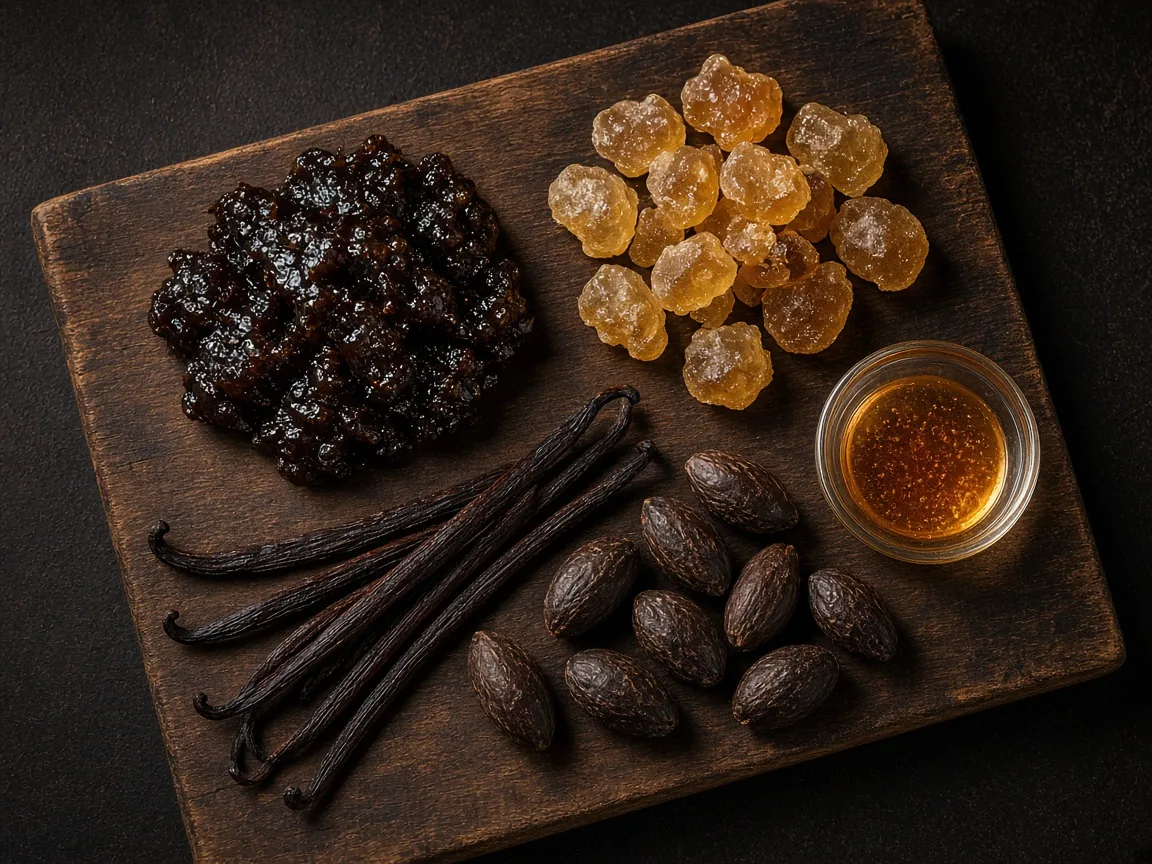
Perfumery “amber” has nothing to do with fossilised tree resin (the gemstone), which has little smell. Instead, amber is an accord: a blend that creates the impression of a warm, glowing resin. Classic ingredients include:
- Labdanum: a sticky resin from the rockrose shrub, leathery and balsamic.
- Benzoin: a sweet, vanilla-like resin.
- Vanilla or vanillin: sweetness and roundness.
- Sometimes tonka, styrax or tolu balsam for extra depth.
The result is warm, sweet, slightly powdery and very long-lasting. Amber is the backbone of the “oriental” or amber fragrance family, and it is everywhere in Arabian perfumery.
Amber on a real label
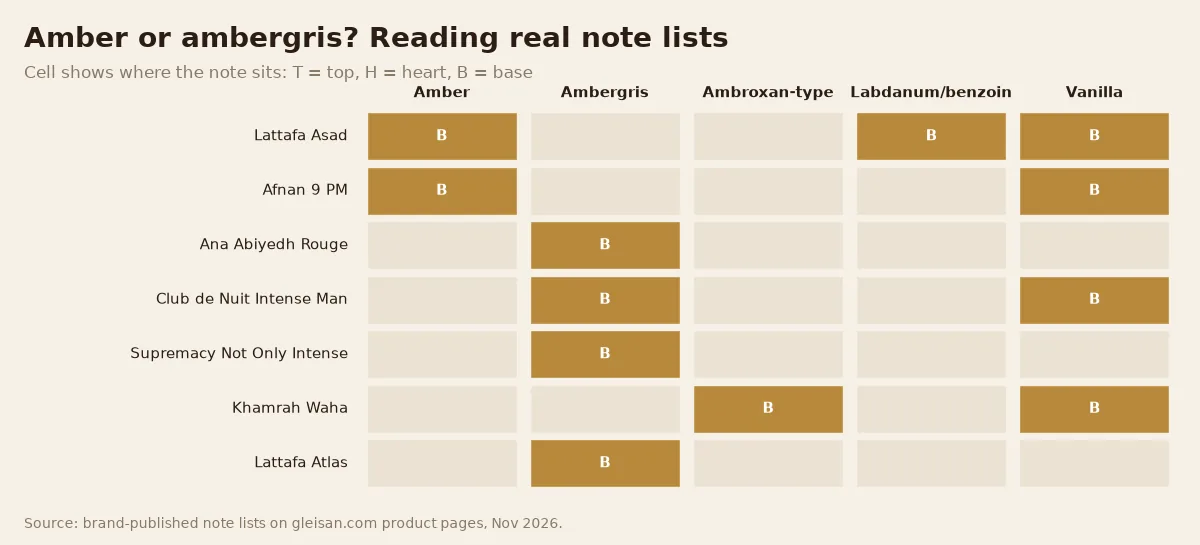
Lattafa Asad lists vanilla, amber, wood, benzoin and labdanum in its base: a textbook amber accord under black pepper, tobacco, coffee and patchouli. Afnan 9 PM finishes on patchouli, amber, vanilla and tonka bean, another classic sweet amber base.
What is ambergris?
Ambergris forms in the digestive system of sperm whales. Expelled into the sea, it floats for years, slowly oxidising in sun and salt water. Fresh ambergris smells unpleasant; aged pieces develop a complex scent described as marine, salty, sweet, musky, slightly tobacco-like and mineral. It also acts as a fixative, helping other notes last.
Natural ambergris is rare and expensive, and its trade is restricted in some countries, including the United States. As a result, almost all modern perfumes use substitutes:
- Ambroxan / Ambrox: made from sclareol, a compound from clary sage. Dry, woody-ambery and slightly salty.
- Other amber-woody molecules, such as those listed as “Ambrofix” or “amberwood”, which give a clean, radiant, woody glow.
When a label says “ambergris”, it usually means an accord that recreates this salty, musky radiance.
Ambergris on a real label
Lattafa Ana Abiyedh in the Rouge version finishes on ambergris, musk and oakmoss, giving it an airy, mineral sweetness. Armaf Club de Nuit Intense Man lists musk, ambergris, patchouli and vanilla in its base, and Afnan Supremacy Not Only Intense ends on saffron, musk and ambergris. Lattafa Atlas pairs salt, sea notes and lemon with ambergris, sandalwood and oakmoss: ambergris used for a marine effect.
Why the names are so similar
The confusion is centuries old. The English word amber comes from the Arabic ʿanbar, which originally meant ambergris. In medieval Europe the name drifted to the fossil resin washed up on Baltic shores, perhaps because both were found on beaches and both were burned for their scent. Later, to keep them apart, the whale material became “ambergris”, from the French ambre gris (grey amber), while the resin was sometimes called ambre jaune (yellow amber).
Perfumery added a third meaning: the warm resin-and-vanilla accord we now call amber. So one word, three different things, and two of them have nothing to do with the third.
In the Gulf you will still see anbar (عنبر) on oil blends and incense. Depending on the maker, it can point to a warm amber accord or to an ambergris-style note, so always read the full note list.
How to recognise each on your skin
- Amber feels thick and sweet within minutes. It often smells like warm resin, vanilla and a little powder, and it clings to clothes.
- Ambergris-type notes feel transparent. You may notice a salty, slightly mineral radiance that seems to come and go, strong one moment and faint the next. That “on and off” effect is typical of ambroxan-style molecules.
- Both together give a sweet base with a bright, airy lift, a combination many modern Arabian perfumes use.
Side by side
| Amber | Ambergris | |
|---|---|---|
| What it is | A blended accord of resins and vanilla | A whale-derived material, now mostly replaced by synthetics |
| Smells | Warm, sweet, resinous, powdery | Salty, marine, musky, mineral, softly sweet |
| Feels | Cosy, heavy, golden | Airy, radiant, skin-like |
| Best seasons | Cool evenings, winter | Year-round; often used in fresh scents |
| Common partners | Vanilla, oud, saffron, tonka | Musk, citrus, woods, sea notes |
Other names that add to the confusion
- Ambrette: seeds of the musk mallow plant. Musky, slightly pear-like. Not related to amber or ambergris.
- White amber: usually a lighter, cleaner amber accord, often with musk.
- Amberwood: a woody, ambery accord, often based on ambergris-type molecules.
- Akigalawood: a woody, peppery patchouli derivative, sometimes listed next to amber notes, as in Khamrah Waha’s base of akigalawood, tonka bean, vanilla, musk and Ambrofix. See the Khamrah line guide.
Which one is right for you?
- You love warm, sweet, cosy scents: look for amber, labdanum, benzoin and vanilla in the base. Our best winter perfumes leans this way.
- You prefer fresh, clean scents that still last: look for ambergris, ambroxan or amberwood. Many fresh scents in our best perfumes for hot weather use them.
- You want something in between: many scents use both, a sweet amber base lifted by an ambergris-type molecule.
How amber and ambergris behave in heat
Amber accords become denser and sweeter on hot skin, so apply less in summer. Ambergris-style notes tend to radiate in warmth, which is why they are popular in fresh scents for hot climates. Read how to make perfume last longer in hot weather for application tips.
Frequently asked questions
Is amber perfume made from amber stone? No. It is a resin-and-vanilla accord. Fossil amber has very little scent.
Does perfume with ambergris contain whale material? Almost never today. Modern perfumes use synthetic substitutes such as ambroxan.
Is Al Haramain Amber Oud an amber scent? Despite the name, many editions in that line are fruity, fresh or woody rather than classic resinous ambers. See our Amber Oud collection guide.
To go deeper into how notes work together, start with fragrance notes explained.
Keep reading
Shop the story
Keep reading
17 Nov, 2026 · 6 min read
Christmas Perfume Gifts 2026: Ideas for Him, for Her and Last-Minute Shoppers
Warm, festive Arabian perfumes for him and for her, plus foolproof picks for last-minute shoppers who don't know the recipient's taste.
Read the story →
17 Nov, 2026 · 7 min read
Arabian Perfume Gift Guide: How to Pick a Scent for Someone Else
Buying perfume for someone else is easier than it looks. A practical guide to safe scent profiles, sets, oils and bakhoor, with picks for every kind of recipient.
Read the story →
17 Nov, 2026 · 7 min read
Perfume Gift Sets for Men: Sets Worth Giving
Which perfume gift set suits him? Travel sets, discovery kits and oud sets compared, with what's inside each and tips for choosing.
Read the story →